Introducing GoalPath: Stop Writing Status Reports. Start Shipping.
Introducing GoalPath
Most teams don't fail due to lack of execution. They fail because stakeholders and teams talk past each other. Progress gets interpreted, not shared.
We built GoalPath to fix that.
The Problem
Traditional project management tools are blank canvases. You set up Jira, then spend weeks documenting "how we use Jira" on Confluence. You build a roadmap in a spreadsheet, and it's outdated by Monday. You spend Friday afternoon writing the same status update you wrote last Friday.
Meanwhile, stakeholders keep asking "where are we?" because they don't trust the green dots on your dashboard.
The real cost isn't the tool. It's the process tax around it.
A Different Approach
GoalPath embeds lean delivery expertise directly in the product. No separate documentation. No "how we work" wiki. No consultants.
1. Automatic Progress Reports
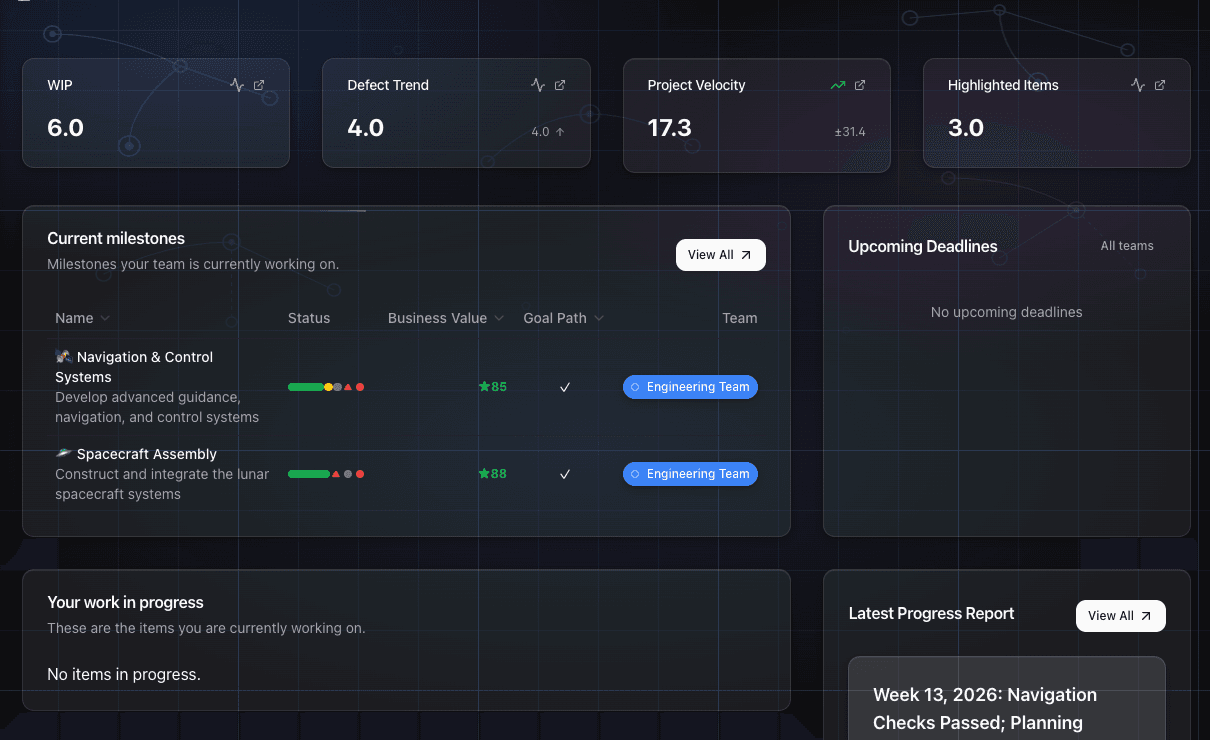
Every week, stakeholders get plain-English progress reports generated from your team's actual work:
- What shipped: completed items with context stakeholders can understand
- What's blocked: active blockers flagged automatically
- Forecast changes: "Launch moved 3 days, now Feb 14"
- What needs attention: risk-adjusted delivery dates with confidence ranges
Time to create: 0 minutes. Reports generate automatically every Sunday night, ready for Monday morning.
This isn't reporting. It's shared reality.
2. Data-Driven Forecasts
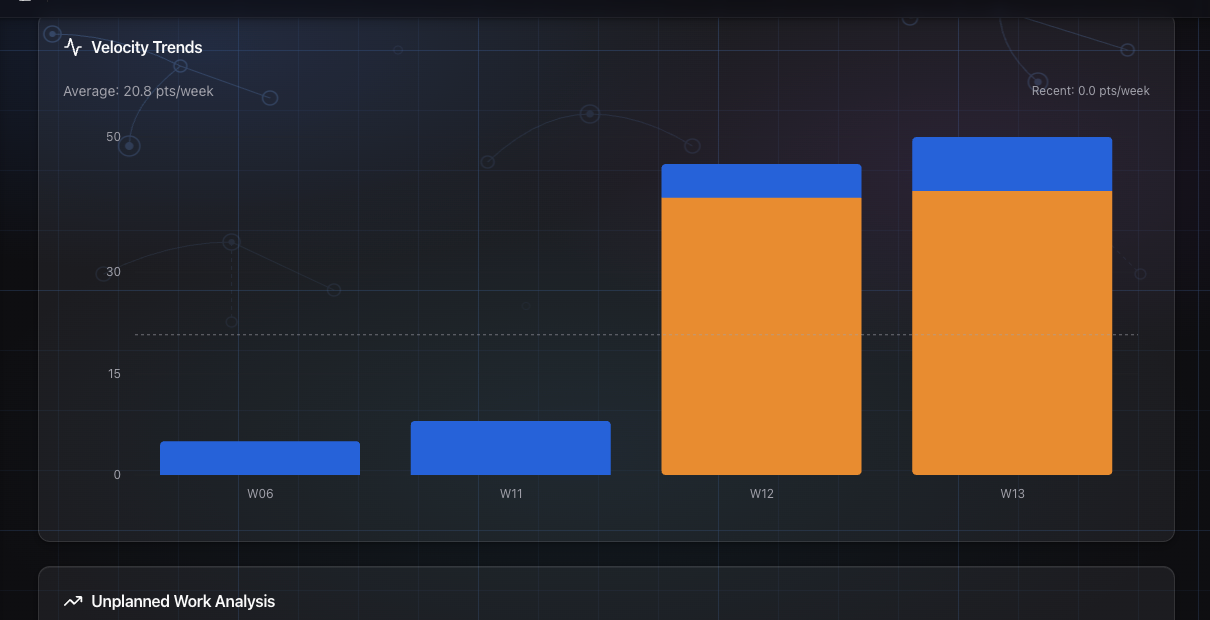
Instead of guessing "when will this be done?", GoalPath calculates it from your team's actual velocity:
- 3-point estimates: Best case, expected, and risk-adjusted completion dates
- Confidence-aware: High, Medium, or Low confidence shapes uncertainty buffers
- Multitasking penalties: Accounts for the real cost of context switching
- Dependency-aware: Forecasts respect what's blocking what
Forecasts update automatically as work completes. No spreadsheet math. No guessing.
3. Process Built Into the Interface
GoalPath guides you through the right workflow: the interface shows you what to do next and why. Alignment meetings have built-in stages. The roadmap shows dependency flow toward goals. Prioritization uses proven frameworks (RICE, Impact/Effort, MoSCoW, or weighted scoring).
Result: No training docs. No process documentation. Just open GoalPath and follow the interface.
4. Roadmaps That Actually Navigate
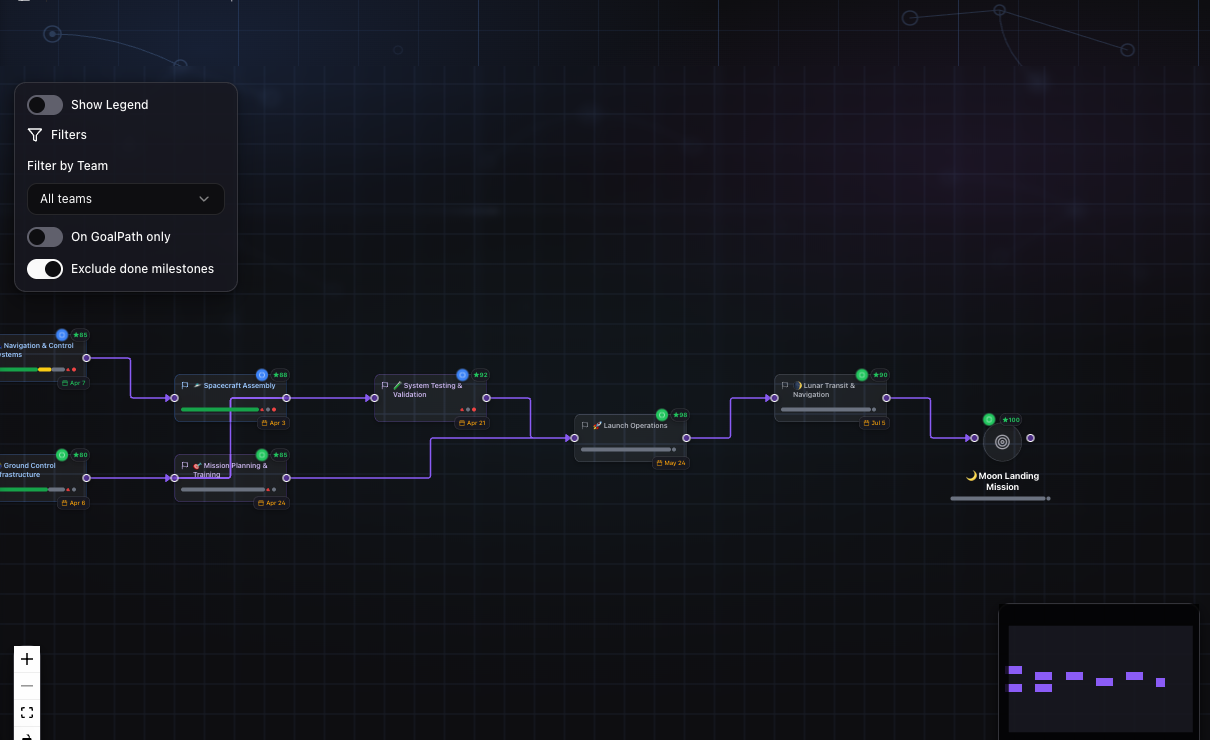
Traditional roadmaps are wishful timelines. GoalPath roadmaps show the dependency flow toward business goals:
- Reverse plan from outcomes back to current work
- See the critical path and bottlenecks at a glance
- Goal paths highlight what you're committed to vs. what you're exploring
- Forecasts update as the roadmap evolves
Roadmaps become navigation tools, not decorative timelines.
Who It's For
GoalPath is built for teams with 5-20 engineers, where everyone still knows each other but stakeholders are starting to ask "where are we?" multiple times per week.
- Product Owners & PMs spending hours on status updates
- Tech Leads & CTOs who want stakeholder visibility without interrupting their team
- Founders who realize spreadsheets won't scale past 5 engineers
Getting Started
- Create Your Project: set up your first project and invite your team
- Add Milestones: define key deliverables and connect dependencies
- Track Velocity: complete work items to build your baseline
- Review Forecasts: see realistic delivery dates with confidence ranges
The Bottom Line
Replace 3-5 hours of status meetings per week with one automated update that takes 0 minutes to create. Your team ships. Your stakeholders stay informed. Zero meetings required.
Ready to plan your roadmap with data?
Create an account on GoalPath and start tracking velocity, forecasting milestones, and delivering predictably.
Create an Account