When everything is Priority 1, teams default to the loudest work
Prioritisation is a leadership visibility problem
If you have worked in software for a while, especially in startups, you might have noticed that the priorities always seem to shift. Someone met a potential customer, and they really liked the idea of an automatic tax statement, next week we really need to have an integration to Google Workspace only to two weeks later have to onboard someone who is using Office 365.
The team just keeps on building, never sure that what they shipped last week still matters to anyone.
You could say that it's a lack of vision or a goal. But in reality, working with product development is about balancing multiple goals against each other, and this is often something that takes a lot of time and resources. A product manager or owner holds multiple meetings with both developers and sales and marketing, only to 3 weeks later hold the same meetings again. This time, with a different outcome.
Or the choice of the next feature to develop is dictated by the head of sales who "has a lead on the great next deal". The urgent Slack ping. The hallway ask. The VP who's most visible this week. Teams don't choose those things because people are lazy. They choose them because leadership hasn't made trade‑offs visible. When everything is Priority 1, the loudest stakeholder wins.
When planning is based on gut feel and emotions, the long term plan suffers. No product vision or big hairy audacious goal will help you, if you don't show how to take that vision to reality. Not with a perfect plan, but with a guiding strategy.
If prioritization is a leadership visibility problem, the solution isn't another spreadsheet. You need a visible, defensible system that turns stakeholder preference into a ranked agenda the team can trust.
Why this matters
Unclear priorities create a feeling that you're not progressing, you are not achieving a goal. The every day can feel productive, and filled with wins. But if you zoom out and take a look at a 6-months span, you haven't actually made progress. Your product is basically the same, but with a few new additions. Longer feature development where features build on each other to compound business value becomes impossible. The idea of being able to do better and better each week, month, year loses validity and inevitably in this climate, it means you fall behind. Either you lose customers, or you lose talent frustrated that nothing changes.
How to break the cycle
There are two strategies that I recommend to break this trend. To create structure, while still allowing people to come up with ideas and help align to a vision. Having a vision or big hairy audacious goal (BHAG) is great. But to achieve the goal you need to have a plan of how to get there. You might not follow the plan to the letter, there might be backup plans. But a roadmap to reach that goal is important.
Reverse planning
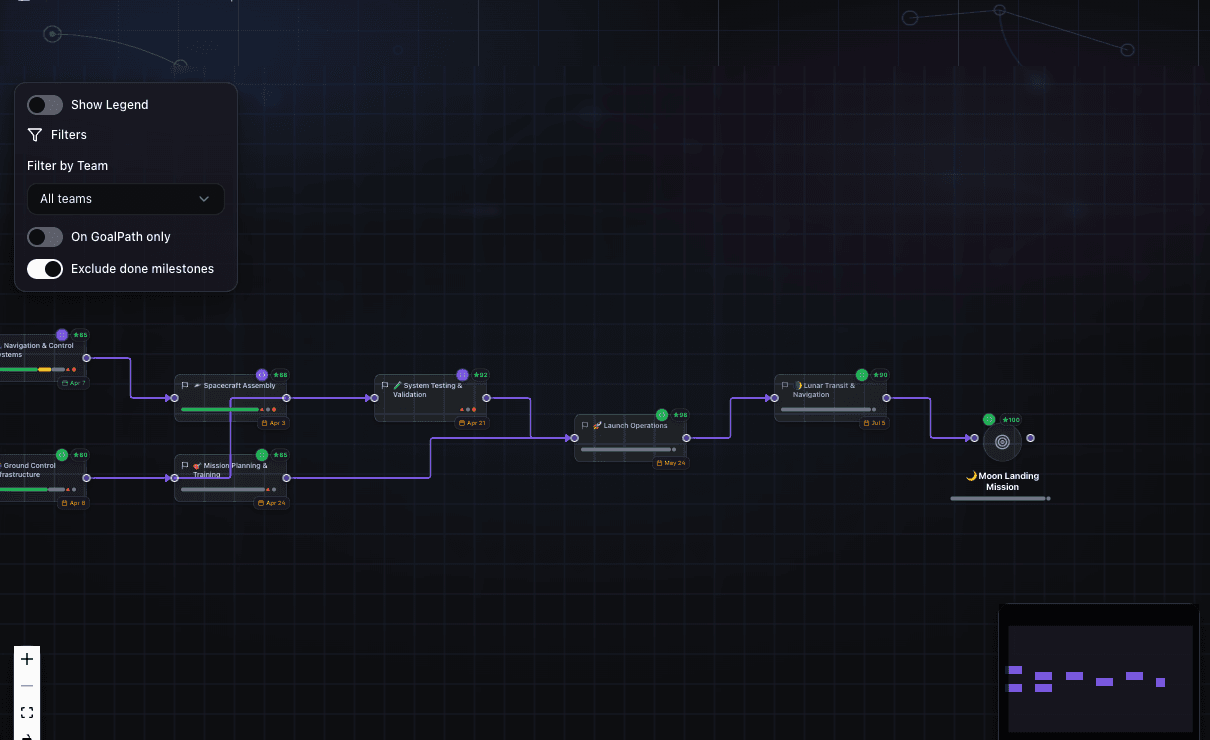
In engineering and military planning there is a concept called reverse planning. Let's use a simple example, silly but simple. Let's say we're going to the moon.
If we want to reach the moon, we will need a moon lander, to get the moon lander to the moon, we will need a rocket, to launch the rocket we will need a launch pad.
The idea is that for each goal we see, we ask ourselves a single question "What do we need to get here?".
This is greatly simplified, but breaking the big hairy audacious goal down into smaller goals by asking the same question over and over again, is a great way to create a roadmap of what needs to be done to achieve the goal. Your great vision becomes that guiding star, the reverse planning process helps you ideate and develop the plan. It might even show you multiple ways to reach the goal.
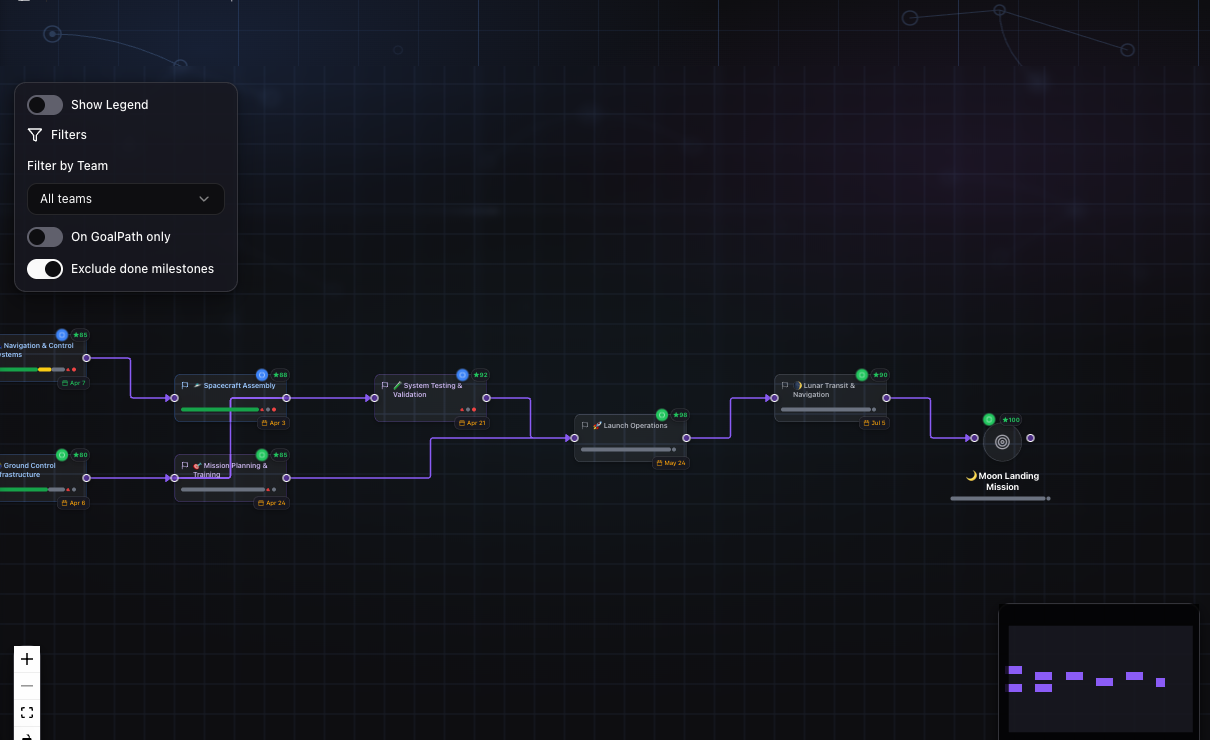
We do this in GoalPath, creating a visual roadmap, giving you options of how to reach the goal, or just shows the path there.
Prioritising and choosing a path
Strategic thinking is not the default operating mode of most minds. Most people need to put their mind into planning or logic mode to assess if something is actually the right choice. A good way to do this is to have them vote. GoalPath supports multiple voting frameworks, you can even have your own. But what this does is that it forces you to take a step back and think about something from a few clarifying questions. If you create your own voting questions, you can have it align to your vision, further enforcing that we are trying to achieve a vision or goal. You can of course do this in Excel or any spreadsheet software if you wish, that's what I did before I made GoalPath.
For early stage startups or solo developers (yes, solo developers need structure too) a simple framework such as MoSCoW is a good starting point until you created a first version, or it's becoming harder and harder to choose between your options. If you work for a non-profit or have a specific and very clear vision, taking the time to create your own questions could be worth it. I recommend doing that in a workshop fashion with your stakeholders.
Having multiple people vote creates inclusion and draws on crowd intelligence, and inevitably helps make alignment and adoption easier.
GoalPath will take the votes and normalise the results to a business value score between 1-100. All of a sudden, you will be able to sort what you plan to do based on the value you think it will provide. Meaning you can compare features to each other based on a strategic value instead of someone's eagerness or loudness.
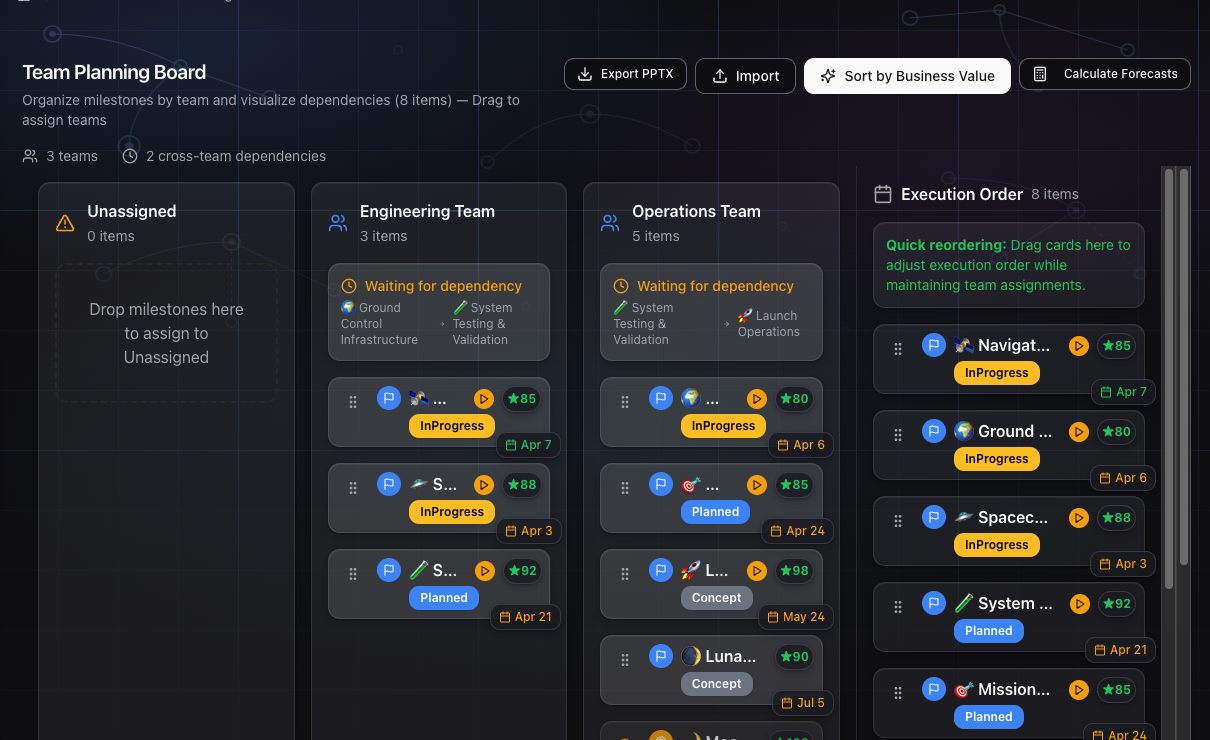
Now if you sort them based on the business value, you will be able to quickly focus your prioritisation and planning efforts on the most valuable parts of your plan.
Ordering becomes simple - but we still need to respect the plan
An ordered list is a great start to a backlog, but simply ordering on business value is not enough. A technical Product Manager might be able to respect dependencies, but it might not be enough. Some things just need to be in order. Coming back to the space program, we can't have a moon landing without a rocket to get us there.
Since we did the reverse planning in roadmap view, we captured the dependencies between the milestones we needed to reach to achieve our BHAG. GoalPath can now automatically create a rough backlog of which things to do in what order to reach the goal, using the dependencies and the business value as a guide. Again, creating a backlog for you to follow, and helping you focus on the most important next steps of the plan.
Show the plan
Clearly showing everyone the plan, and making it accessible. Involving people in the design of it, allows the rest of the team to "make the right choice" because they know where we are going. It might not be 100% perfect, but without a framework, a vision and a structured plan to get there team members are robbed of the ability to make the right choice.
Having
- Business‑value voting collected from stakeholder preferences.
- A roadmap showing how we will reach a goal
- A structured backlog showing what order to execute things
Creates a combination that turns preferences into a defensible priority order and makes the decision visible where teams work.
The loudest voice stops being the de facto decider because the priority ranking and rationale live in the tool.
Ready to plan your roadmap with data?
Create an account on GoalPath and start tracking velocity, forecasting milestones, and delivering predictably.
Create an Account